Style guide
One page that exercises every element the template can set.
Block elements
Level three
Level four
Level five
Level six
Bold, italic, and bold italic in one run. Struck through stays quiet. The morph target is resampled on every page load, which is the bug.
An inline link, a https://example.com/autolink, and a reference — Bishop.
Everything should be built top-down, except the first time.
Second paragraph inside the same quote.
- Unordered item
- Item with nesting
- Nested one level
- Nested two levels
- Last item
- Ordered item
- Item with nesting
- Nested ordered
- Sibling
- Last item
Point sprite : A single gl.POINTS vertex, discarded outside a unit disc.
Arcball : Quaternion drag mapping screen delta to an axis-angle rotation.
Press Ctrl+C to abort; the program prints built 3 posts, 5 projects → _site/. H2O, and E = mc2. The GPU is saturated.
Show the derivation
A paragraph with code, then a list:
- one
- two
1 | |
Editorial
Dual section titles
A muted mono .section-label over a serif h2 — the label owns the field hairline so the pair reads as one composition. Authors can also wrap both in <header class="section-head">.
Code
Read the palette with getComputedStyle(document.documentElement). Token tour: keywords (teal mix + weight), strings (rose), numbers/bools (warn), types/builtins (accent), decorators (ok), comments (mute).
Preferred fence and chip languages: python, json, html, bash, zsh, curl. (curl / zsh / sh colour as bash.) Other langs still work; these are the ones the palette is tuned for.
Inline chips
Bare backticks stay a wash chip — good for paths and ids: src/static/style.css, 0x2982. Opt into the same Pygments tokens with a mock shebang inside the backticks:
- Python:
print("hi") + 1 - JSON:
{"ok": true, "n": 2} - HTML:
<span class="mark-ok">✓</span> - Bash:
export PORT=8000 - Zsh:
print -l ${(k)path} - Curl:
curl -sS -I https://example.com - Unknown langs drop the marker:
foo()→ plainfoo()
Fences
Python — full token tour:
1 2 3 4 5 6 7 8 9 10 11 12 13 14 15 16 17 18 19 20 21 22 23 24 25 26 27 28 29 30 31 32 33 | |
Bash:
1 2 3 4 5 6 | |
Zsh (same BashLexer as bash / curl):
1 2 3 4 | |
Curl (aliased to bash):
1 2 3 4 | |
JSON:
1 2 3 4 5 6 | |
HTML:
1 2 3 4 5 6 | |
A bare pre / div.highlight hangs half a module. The same three width
tiers apply to figures, listings, and tables — one vocabulary, not three:
| Class | Width |
|---|---|
.compact |
Measure (undo the default hang; denser padding) |
.plate |
Listing bay |
.fullwidth |
Bay + note channel |
1 2 | |
1 2 3 | |
1 2 | |
Table
The same .compact / .plate / .fullwidth tiers. Narrow tables stay on
the measure; five or more columns — or class="plate" — open the
listing bay; class="fullwidth" spends the note channel. Column heads
are mono micro-labels; the first body cell becomes a stub
th[scope="row"] (sticky when a bay scrolls). Column alignment is the
colon dance — ------ left, -----: right, :----: centre. On the
measure, prose cells may wrap; stubs, heads, and right-aligned (numeric)
cells stay one line. Bay tables keep every cell one line and scroll
instead. Status marks colour a cell without shouting:
✓ ok, ✗ fail,
✗ warn.
Default (measure)
Bare pipe table — on the prose measure, textbook frame. Points is
right-aligned (-----:); Morph target and Status are centred (:----:).
Prose in a body cell may wrap; the stub and the numeric column stay one line.
| Shape | Points | Note | Status |
|---|---|---|---|
| Sphere | 4200 | Morphs toward a torus; the long note wraps inside the measure. | ✓ |
| Torus | 4200 | No morph target yet. | ✗ |
| Helix | 4200 | No morph target yet. | ✗ |
| Plane | 4200 | Morphs toward a sphere. | ✓ |
Compact + caption
A caption is ordinary HTML on the table. Dense grids opt into
class="compact" — same measure, tighter rhythm.
| Provider | Context | In | Out |
|---|---|---|---|
| chutes | 262,144 | 0.35 | 2.75 |
| venice | 262,144 | 0.45 | 3.20 |
| alibaba | 1,000,000 | 0.425 | 2.55 |
Plate (listing bay)
Five or more columns auto-open the listing bay (or pass class="plate").
Same hang as figure.plate / code plates; the stub freezes when the bay
scrolls.
| Provider | Quant | Context | Max out | In (USD/M) | Out (USD/M) | Cache-read | Up 30m |
|---|---|---|---|---|---|---|---|
| chutes | fp8 | 262,144 | 65,536 | 0.35 | 2.75 | 0.035 | 97.0 |
| coreweave | fp8 | 262,144 | 262,144 | 0.40 | 3.00 | 0.15 | 96.3 |
| akashml | bf16 | 262,144 | 131,072 | 0.40 | 3.00 | 0.05 | 99.8 |
| alibaba | unknown | 1,000,000 | 131,072 | 0.425 | 2.55 | 0.085 | 100.0 |
| venice | fp8 | 262,144 | 65,536 | 0.45 | 3.20 | n/a | 98.9 |
Fullwidth
class="fullwidth" lifts onto the scroll bay at build — listing hang plus
the note channel, same edges as figure.fullwidth / pre.fullwidth.
| Engine / route | Result | Tokens | Cost | Router saw |
|---|---|---|---|---|
native @ venice |
✓ correct | 5,272 | $0.0028 | Venice, no parser |
plugins omitted |
✓ OCR path | 2,545 | $0.0034 | CoreWeave, mistral-ocr |
cloudflare-ai |
✗ bypass | 5,272 | $0.0027 | Venice native after 9× 400 |
mistral-ocr |
✗ same bypass | 5,272 | $0.0027 | Venice native |
Media
Four widths share one centre line. A bare figure keeps the measure; a figure.plate opens half a module onto the field listings and section rules already use; a figure.fullwidth also spends the note channel; a figure.margin floats into that channel beside the prose.
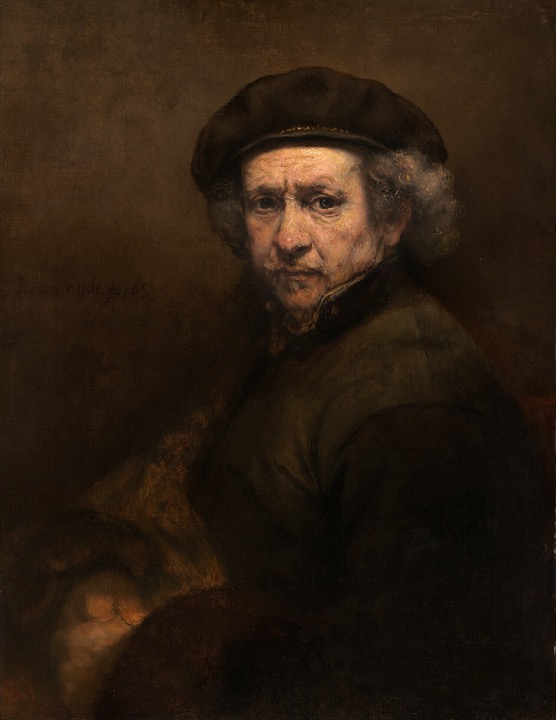

A margin figure sits beside this paragraph rather than interrupting it, which is where a picture belongs when it is evidence for a sentence and not the subject of the section. It shares the channel with the sidenotes, so notes and small pictures queue down one column instead of two.
Figure gallery
A figure.plate.gallery is a caption-bound slide stack: one locked bay sized from the first plate (contain-fit — scale hits max width or max height first), every later slide letterboxes into that frame, dots and Prev/Next in the mono voice, and a Hilbert-curve WebGL wipe between contain-fitted plates (instant cut under prefers-reduced-motion). Focus the gallery and use the arrow keys.

An embed has no intrinsic ratio, so .iframe-wrapper carries one (16/9 by default; override with --ratio). YouTube uses a lite facade (data-youtube) — poster until click:
Interactives
Two runtimes. fig3d is the WebGL point-cloud morph; [data-fig] mounts a canvas component from fig-core.js (same plate bay as tables and listings). The lab page holds the full catalog — one of each here is enough to catch a layout or script regression.
Mermaid
A fenced mermaid block becomes figure.mermaid on the listing bay (same hang as bare pre); graphs wider than that bay scroll. Paper nodes, mute outlines, and JetBrains Mono labels — the same plate voice as tables and kbd, not Mermaid’s default/dark themes.
Flowchart
Shapes, a decision, edge labels, and a dashed cluster.
flowchart TB
    subgraph build["build.py"]
        A["markdown"] --> B{"draft?"}
        B -->|no| C["render"]
        B -->|yes| D["skip"]
        C --> E[("_site/")]
    end
    E --> F[["Cloud Run"]]
    F --> G(("CDN"))
Sequence
Actors, notes, loops, and activation.
sequenceDiagram
    participant M as markdown
    participant B as build.py
    participant S as _site/
    M->>B: fence
    activate B
    Note right of B: themeVariables<br/>from :root
    B->>S: figure.mermaid
    deactivate B
    loop prefers-color-scheme
        B-->>S: remount
    end
State
stateDiagram-v2
    [*] --> Source: fence
    Source --> Rendered: mermaid.render
    Rendered --> Source: color-scheme change
    Rendered --> [*]: ok
    Source --> Source: CDN miss
Class
classDiagram
    class Figure {
        +string className
        +render(id, code) svg
    }
    class Theme {
        +paper
        +ink
        +mute
    }
    Figure --> Theme : brandTheme()
Pie
pie showData
    title Tokens on the page
    "accent" : 40
    "mute" : 25
    "ok" : 15
    "warn" : 12
    "fail" : 8
Math
Inline: $\mathcal{L} = -\sum_k y_k \log \hat{y}_k$ with $w_i \in \mathbb{R}^{d}$.
$$ \hat{y} = \sigma\!\left(\sum_{i=1}^{n} w_i x_i + b\right) $$
A Push 3 costs \$2,000 — escaped, so KaTeX leaves it alone.
Footnotes and citations
Hand-written notes use the Markdown footnote form. Point sprites are cheaper than instanced quads.One vertex, one fragment, no index buffer. See fig.js.
Smarty typography: straight quotes “become curly”, an em dash — like so, a numeric range 30–40, an ellipsis… and it’s got apostrophes.
Bibliographic cites use [@key]. Keys resolve from src/references.bib at build time — the same file the README lists. On a wide viewport the note rides the margin; below 1152px the marker jumps to the Notes list at the end of the page. Bishop remains the reference for the classical view Bishop, C. M. & Nasrabadi, N. M. Pattern recognition and machine learning. Springer. (2006) , and the deep-learning successor updates it Goodfellow, I., Bengio, Y. & Courville, A. Deep learning. MIT press. (2016) .
Murphy’s introduction is the probabilistic counterpart Murphy, K. P. Probabilistic machine learning: an introduction. MIT press. (2022) .
1 2 3 4 5 6 | |
Dates
Shipped — relative by default; hover for the exact date.
- One vertex, one fragment, no index buffer. See fig.js.
- Bishop, C. M. & Nasrabadi, N. M. Pattern recognition and machine learning. Springer. (2006)
- Goodfellow, I., Bengio, Y. & Courville, A. Deep learning. MIT press. (2016)
- Murphy, K. P. Probabilistic machine learning: an introduction. MIT press. (2022)
Comments