So, you want to attach a PDF on OpenRouter?
You attach a PDF, OpenRouter routes it, and a model answers. That is the pitch. Stripe agreed to acquire the company for more than $7 billion. The exhibit here is Qwen 3.8-27B, released a few days before these measurements.
Most people meet a PDF on an LLM API as a convenience: attach the file, ask a question, receive an answer. Before any of that machinery starts, there is a quieter question: what does it mean for a document to arrive at a model at all?
Imagine a sealed envelope handed to a courier who claims every address in the city. The courier’s name is a model slug. Behind that name sit independent doors, each with its own lock, its own meter, and its own idea of what counts as mail.
The docs lead with a promise: this feature works on any model.OpenRouter, PDF Inputs. It promises models; this piece measures providers. True, as written. Compatible with almost everything going wrong. On this slug, one of eight measured doors accepts a native file part. Omit the engine on a 13-page born-digital contract and the bill is 5.9× the free extractor.
Four stacked decisions
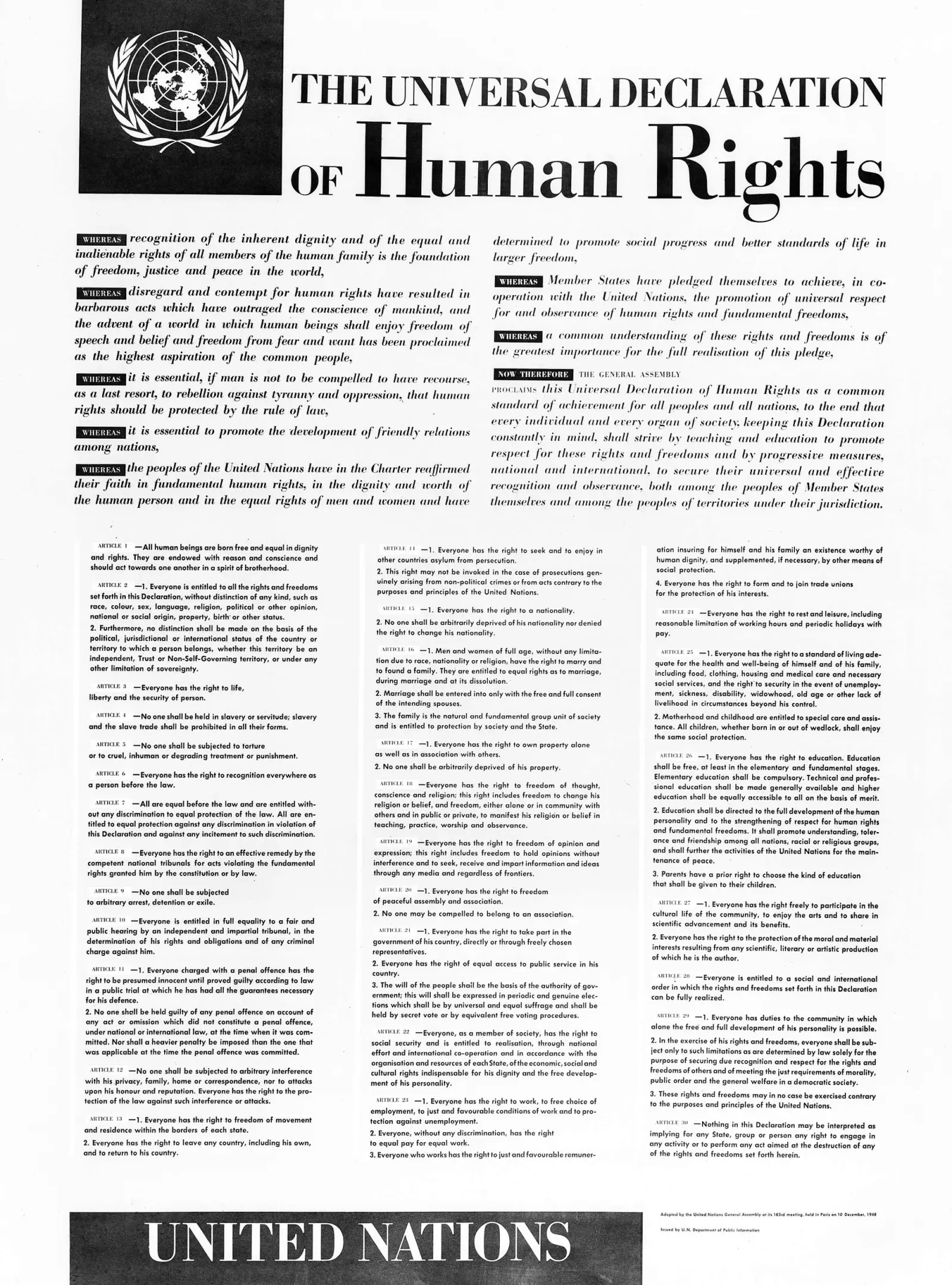
Here is a complete call: one model, one PDF, no engine field.OpenRouter Responses API via the OpenAI Python SDK with base_url="https://openrouter.ai/api/v1". OpenRouter-only fields (plugins, provider) go in extra_body, the metadata header in extra_headers. Chat Completions is the same router under different field names. The exhibit is a one-page scanned poster with no text layer. A four-page born-digital résumé is the contrast document for the tables further down.
1 2 3 4 5 6 7 8 9 10 11 12 13 14 15 16 17 18 19 20 21 22 23 24 25 26 27 | |
That payload is four decisions stacked, and the last splits into two fields.
model. A slug, not a deployment. Behindqwen/qwen3.8-27bsit independent providers: different hardware, different serving stacks, and (as we’ll measure) different file support. The slug is what you ask for. The endpoint is what you get.input→ message →content. The Responses dialect wraps turns asinput[]messages. Insidecontentyou put parts. Text would beinput_text; a PDF isinput_file.input_file/file_data. The attachment itself: a base64 data URL (data:application/pdf;base64,…) or a plain public HTTPS URL. OpenRouter’s examples always include afilename, but the API accepts the part without it, and when present the host may inject it into the model context ([File: document.pdf]). Omit it.plugins. An array of server-side steps OpenRouter may run before the request reaches a provider. Omitting it looks optional. It isn’t: for file input, this is where parsing (or the refusal to parse) is configured. The shape that matters is one object —"plugins": [{"id": "file-parser", "pdf": {"engine": "…"}}]— and inside it,pdf.enginenames who reads the PDF.
Three peels name the file: a slug, a file part, and a field that decides who touches the bytes. Which doors accept that file is an empirical question.
The catalog does not know its doors
Native file input needs a rare lock: a host that accepts raw file parts. A model on OpenRouter is not a deployment. It is a name painted on doors. You can list them:
1 2 3 4 5 6 7 8 9 10 | |
The catalog exposes the same modality filter on the web and in the API: openrouter.ai/models?input_modalities=file is GET /api/v1/models?input_modalities=file. The parameter is comma-separated with AND semantics, so a model must declare every listed modality in architecture.input_modalities. Allowed values: text, image, file, audio, video. Stack all five, ?input_modalities=image,file,audio,video,text, and the list shrinks to frontier multimodal slugs; Qwen drops out (no file), Grok 4.6 drops out (no audio or video).
Notice what is absent. architecture.input_modalities is model-level — one shared list for the slug, the same field the catalog filter reads — not a per-endpoint field. /endpoints will tell you pricing, uptime, supported_parameters, and cache or voice flags; /providers is only org metadata. Neither payload says which hosts accept a raw PDF. For this slug the live list is ['text', 'image', 'video'], no file, and the endpoint rows add nothing about native file parts. A slug that does declare file still won’t tell you which host bills you how: Grok 4.6’s two xAI endpoints share ['text', 'image', 'file'] but the schema advertises capability, not routing.
The API won’t tell you which doors accept a file part. The only way to find out is to pin and ask: forbid failover, and read the verdict.
1 | |
The catalog roster that week listed ten hosts, Phala and Cloudflare among them. Eight of those I pinned with engine: native and allow_fallbacks: false:
| Provider | Native PDF | Images | Failure mode |
|---|---|---|---|
| venice | ✓ | ✓ | n/a |
| the other seven | ✗ | ✓ | 400: The current model does not support PDF file input |
One of eight, on this slug, on this roster. Off the file filter doesn’t mean nobody accepts PDFs, and on it wouldn’t say which endpoint does. Seven of eight hosts here reject the file part. Phala and Cloudflare, still on the ten-host catalog that week, failed the same native pin. A slug whose providers all implement file parts would sweep this table instead. This isn’t an OpenRouter bug. Inline file parts are simply rare in OpenAI-compatible serving stacks, while image_url is nearly universal. The capability a slug hints at and the capability a given host implements are different facts, and only a live request distinguishes them.
The bars below are shopping — price and uptime you can already sort for. Secondary to the routing fact. The ◆ pdf mark is what those catalog responses won’t list. Toggle a metric; rows re-rank best → worst:
Catalogs lie by omission. Requests don’t.
One practical courtesy: the provider’s real error is buried two levels down. error.message says only “Provider returned error”.
1 2 | |
Only AkashML served bf16; Alibaba declined to say. Default routing does not prefer higher precision. On this slug it will happily land on fp8 (or unknown) unless you say otherwise. You can sort by price, throughput, or latency, not by quant, but you can filter:
1 2 3 4 5 6 | |
Omitting the engine is a cost trap
Watch what an engine actually is before the meters speak.
An engine is whoever touches the bytes before any provider does. The docs list three explicit values:1
"native": Only available for models that support file input natively (charged as input tokens). Forwards the file untouched, so it only works if the destination door accepts file parts."cloudflare-ai": Converts PDFs to markdown using Cloudflare Workers AI (Free). A text-layer extractor. It does not OCR. A scan, a photographed page, a PDF whose glyphs are only pixels — all come back empty."mistral-ocr": Best for scanned documents or PDFs with images ($2 per 1,000 pages).
Leave engine unset and you inherit the silent fallback: native when the router thinks it can, otherwise paid OCR. That default is a cost trap. Set the field on purpose.
The call in the previous section omitted it. For a document that does not have a text layer, this is what came back:
1 2 3 4 5 6 7 8 9 10 11 12 13 14 15 | |
The model is describing the result of a messy OCR, not a clean text layer. Some might think an omitted engine uses native when the model supports it. The metadata header shows what actually ran:
1 2 3 4 5 6 7 8 9 10 11 12 13 14 15 | |
mistral-ocr. CoreWeave was rate-limited; the router fell back to AkashML. Unset means “native if possible, else mistral-ocr.” For a model where seven of eight providers aren’t native, that “else” is your default. Measured on a 13-page born-digital contract (selectable text layer, plus an e-signature page), three runs each:
| Request | Engine actually used | Avg cost |
|---|---|---|
plugins omitted |
mistral-ocr |
$0.0311 |
{"engine": "cloudflare-ai"} |
cloudflare-ai | $0.0053 |
Both averages are single-day measurements from 2026-08-24, taken before the mid-day routing flip; the engine mix behind this cost gap can change within hours.
One absent JSON field. 5.9× the cost. On every request. With no warning anywhere but the invoice.
Parser engines only matter when the router cannot reach a native-file door. Naming cloudflare-ai explicitly did not help unpinned, because a native-file host can intercept again. The next tables settle what each named path costs when the document itself changes.
The meter is not the document
On a scan — a page that is only pixels — the free extractor has nothing to lift; on a résumé that already carries a text layer, the same extractor is almost a free transcript. Same request shape, same SDK. The meters disagree.
On the born-digital résumé, omitting plugins is worse than useless: the silent default OCR’d four pages of selectable text and cost 7× the pinned-native bill.
Scanned poster (no text layer)
| Engine / route | Result | input_tokens |
Cost | Router saw |
|---|---|---|---|---|
native @ venice (pinned) |
✓ correct, Venice reads the scan | 5,272 | $0.0028 | Venice, no file-parser pipeline |
plugins omitted → mistral-ocr |
✓ correct, OCR, text forwarded | 2,545 | $0.0034 | CoreWeave, mistral-ocr parsed 1 page |
cloudflare-ai (unpinned) |
✓ correct, but not via the free parserWith engine: "cloudflare-ai" or "mistral-ocr" set but no provider pin, the router still landed on Venice and billed like native file input (~5.3K tokens on this scan), with no file-parser entry in openrouter_metadata.pipeline. The declared engine never ran. On 2026-08-24 the request still carried a filename (udhr_1948.pdf; the 2026-08-25 rematch dropped it), and with a route that actually hit the text-layer extractor, cloudflare-ai returned an empty parse on this scan and the model confabulated from the name4. |
5,272 | $0.0027 | Venice native after 9× 400 elsewhere |
mistral-ocr (unpinned) |
✓ correct, same bypass | 5,272 | $0.0027 | Venice native |
Born-digital résumé (embedded text, 4 pages)
| Engine / route | Result | input_tokens |
Cost | Router saw |
|---|---|---|---|---|
native @ venice (pinned) |
✓ correct | 1,966 | $0.0013 | Venice native |
plugins omitted → mistral-ocr |
✓ correct, but OCR’d a file that already had text | 1,942 | $0.0093 | AkashML, mistral-ocr parsed 4 pages |
cloudflare-ai (unpinned) |
✓ correct, Venice native, not the free extractor | 1,964 | $0.0014 | Venice native |
mistral-ocr (unpinned) |
✓ correct, Venice native | 1,966 | $0.0013 | Venice native |
The free extractor is not a cheap OCR: it only returns text when the PDF already has a text layer, and nothing in the response flags an empty parse. That failure mode was seen exactly once, when a route that truly hit cloudflare-ai came back empty on this scan and the model improvised from the filenameText-layer extractor returns nothing on a scan; the model answered from the filename: “The PDF content appears to be blank, but here is the JSON populated from known facts.” — which itself leaked the answer — so read it as mechanism evidence, not a measured rate. A later rematch never reached the extractor; routing bypassed to Venice native first. The scoped claim: on scans, the text-layer path returns an empty parse and lets the model improvise silently; on born-digital files it is the cheap path.
Notice the native token counts: ~5.3K on the scan (Venice is running a vision-style ingest) and ~2.0K on the four-page résumé. The same poster on the same pinned-native path billed 90 tokens on an earlier day — a ~59× swing on identical bytes within 36 hours, with no schema field to explain it. Native file billing is set by the provider’s own ingestion pipeline. It is not a fixed formula you can read off a config file.
Native when a door accepts it; free lift when a text layer exists; paid read when the page is only pixels. The costs above are what that picture looks like under real routing — and routing is itself a moving part.
Measurement note. Same request shape, same SDK; native file calls pinned Venice (provider.only = ["venice"], allow_fallbacks: false); metadata header on for every run. Engine tables above are from a 2026-08-25 rematch of the 2026-08-24 matrix: every call omitted filename, so the model could not read a title off the label. Re-run locally with uv run python scripts/test_openrouter_pdf_params.py. Scan = The_universal_declaration_of_human_rights_10_December_1948.pdf (the name on disk only; the request part sent no filename); text layer = src/static/cv.pdf (4 pages, pdftotext extracts cleanly). Contract = 13-page born-digital PDF with a selectable text layer and an e-signature page (visual layout the parsers garble); used for the race and default-engine tables on 2026-08-24 only.
Pin and parse is undefined
Parsing happens before routing. Request a parsing engine and lock a provider, and the two controls collide:
1 2 3 | |
The morning I tested this, the parser silently didn’t run. The raw file went to the pinned provider and 400’d — with both engines, both APIs. Deterministic routing and server-side parsing were mutually exclusive.
By evening, the identical payloads returned 200, with router metadata showing the parser now running before pinned dispatch. Same requests, opposite result, twelve hours apart, verified with a freshly generated PDF to rule out caching. Nothing in the response schema versions this behavior.
Treat pin+parse as undefined.
Why it flipped stays unconfirmed — hypothesis only, from an n=1 day: a staged rollout, a per-account flag, or caching keyed on payload hash. Nothing was confirmed. The morning/evening delta just bounds how much you can rely on pin+parse.
Name a server-side parser — cloudflare-ai or mistral-ocr — and your document’s bytes reach Cloudflare or Mistral before any provider sees them; these engines parse ahead of routing. Unpinned, you may not control, or even know, which path runs: on one measured day both engines landed on Venice native instead, so the answer to “which third party processed my document?” was neither of the two named. Pin native and the bytes touch exactly one host.
For confidential documents on the file path, pin everything you can see — and treat the engine as a disclosure decision, not merely a cost one.
Pictures open every door
The same pages can travel as pictures instead of as a file. It reads like a formatting preference. It isn’t.
The image branch skips the plugin entirely. Render the pages yourself:
1 2 3 4 5 6 | |
1 2 3 4 5 | |
Ordinary input_image parts. No parser, no engine, no trust in anyone else’s extraction. Look back at the eight-provider table: the Images column was already full of checkmarks. Seven of eight doors refuse a file part; all eight already know how to open a picture.
On the same scanned poster, that route billed what the file path’s engines never did:
The bill is higher than pinned-native on this scan. The reach is every door. And because there is no file-parser step, the pin+parse collapse does not apply: the one pinned path that never wavered all day, on all eight providers, is the images route.
Native only reaches Venice (chip native·400 for the fail); parsers fan out to anyone; images reach all eight, pinned or not.
Pixels into tokens
Before the image route can win on merit, you should be able to price it from first principles. What does it mean for a page to become a sequence of tokens?
The vision tower does not see a page as a whole; it cuts the rectangle into tiles, and each tile becomes one visual token. The cost model lives in the model’s actual preprocessor_config.json on HuggingFace:
1 2 3 4 5 6 7 8 | |
Read size carefully. Despite the names, shortest_edge and longest_edge are areas, not edge lengths — a minimum of 65,536 px² (256²) and a maximum of 16,777,216 px² (4096²). The naming is a fossil from older processors that really did clamp edges; the Qwen2VL-family processor reinterprets the same keys as a pixel budget.
The geometry: the vision tower cuts the image into 16 px patches (patch_size), runs them through a 27-layer ViT (hidden size 1,152, 16 heads, from config.json’s vision_config), then a 2×2 spatial merge (merge_size) fuses each quartet of patches into one token projected to the LLM’s 5,120-wide embedding space. One visual token is therefore a 32 × 32 px tile. (temporal_patch_size: 2 is for video; still images are duplicated into a frame pair.)
Before any of that, smart_resize snaps each side to a multiple of 32 and rescales only if the snapped area leaves the budget. Worth carrying client-side, because it prices a request before you send a byte. Condensed from transformers:
1 2 3 4 5 6 7 8 9 10 11 12 13 14 15 16 17 18 19 20 21 | |
Two details people miss: the shrink path uses floor (never exceed the budget) while the grow path uses ceil (always reach the floor), so the two branches round in opposite directions; and an aspect ratio beyond 200:1 is rejected outright, so a degenerate strip of pixels never reaches the model.
1 2 3 | |
Play with it below. The grid is the token grid; the readout is the bill. As you drag past 165 dpi, watch the dashed Alibaba box appear — what that endpoint keeps. Past 423 dpi, the 16.7M px² cliff: the page blurs under smart_resize.
| Render | Letter (850×1100 base) | Tokens/page | A4 equivalent | 100 pages | Fits 262K? |
|---|---|---|---|---|---|
| 100 dpi | 850×1100 | 918 | 962 | 91,800 | ✓ by tokens (~285 max) |
| 150 dpi | 1275×1650 | 2,080 | 2,145 | 208,000 | ✓ barely (~126 max) |
| 300 dpi | 2550×3300 | 8,240 | 8,580 | 824,000 | ✗ 3.1× over (~31 max) |
| ceiling | 3596×4653 @ 423 dpi | 16,240 | 16,264 @ 416 dpi | 1,624,000 | ✗ 6.2× over (~16 max) |
The last column is the token-budget view. At 100 dpi a 100-page filing is only 91.8K tokens — a third of a 262K window — so the math says ~285 pages fit. On OpenRouter that math is not the binding constraint: a real Letter PNG @100 dpi is ~259 KB, and the gateway refuses the request once aggregate image bytes cross ~30 MB (Downloaded image content cannot exceed 30MB). Measured: 95 pages ✓ / 100 ✗, long before context fills. At 300 dpi the same filing needs four requests on tokens alone; at the ceiling, sixteen pages fill the window. Resolution is a budget you spend against page count, then against the payload wall.
The ceiling — the largest render that reaches the model unresized — is 423 dpi for Letter and 416 dpi for A4:
1 2 3 | |
Tokens grow with dpi². Body text is comfortably legible to a 16-px-patch encoder at 100 dpi (~6 to 7 px of x-height on 10 pt body copy); everything above that buys attention compute over blank paper. At 100 dpi, a Letter page costs about the same as its extracted text (~918 visual vs ~850 text tokens). On this model, seeing the page instead of reading a transcript of it is nearly free.
That is the simplified machine. What each host actually bills is a different question.
The cheapest lie arrives with a discount
A derivation is a hypothesis until the invoice agrees. The audit is one subtraction per provider: send a tiny prompt with and without an image, and diff usage.input_tokens.
1 2 3 4 5 6 7 | |
Seven of eight providers billed prediction + 2, the +2 being the <|vision_start|>/<|vision_end|> markers, at every size — including a deliberately over-budget 600-dpi render that came back at exactly the 423-dpi count. Quantization made no difference: the bf16 endpoint billed the same as every fp8 one, because preprocessing runs in the serving layer before any weight is touched.
Toggle the sizes. Seven of eight match the prediction at every size; Alibaba doesn’t past ~165 dpi effective. Tick = prediction; bar = billed:
The eighth provider is why you run audits. Alibaba billed 2,510 tokens for the image everyone else billed at 16,242. Reverse-engineering the number:
1 2 3 4 | |
A pixel cap 6.4× tighter than the model’s own config, applied silently in the serving stack. On that endpoint anything above ~165 dpi is discarded: you pay the upload, 84% of the pixels evaporate, the bill looks pleasingly small, and if the task needed the resolution it degrades with no error and no signal. That is the dashed box in the token-grid figure above.
The cheapest lie is the one that arrives with a discount.
The irony is that this is the one provider whose 1M context could hold all 13 pages of the born-digital contract at maximum resolution (211K visual tokens), and the one that refuses to accept them.
Seven doors honor the config; one quietly tightens it.
The same audit, on your own machine
The serving-layer thesis is checkable without any cloud at all. I ran the identical baseline-subtraction against Ollama on this Mac — same model family, Q4_K_M quant, its own inference stack — reading prompt_eval_count instead of usage.input_tokens. Every row below is a live local measurement, baseline prompt_eval_count = 11:Reproduce with python3 scripts/measure_ollama_vision_tokens_v2.py against a running ollama serve; it writes every row, both predictions, and the match verdict to scripts/measure_ollama_vision_tokens_v2_<date>.json. The synthetic rows use a stdlib PNG writer (banded grey, not a degenerate uniform field); the poster row renders the real UDHR PDF with pdftoppm -r 100. Note that the copy of that PDF committed at the repo root is actually a JPEG with a .pdf extension; render from the original. * The cloud figure is the 2026-08-24 measurement, whose exact render dimensions weren’t preserved; 10,181 is what today’s 2778×3748 render predicts under the HF-config budget, as the poster-table note above explains.
| Image | Ollama billed | HF-config prediction | Cloud (7/8) |
|---|---|---|---|
| 425×550 | 223 | 223 | 223 |
| 850×1100 | 920 | 920 | 920 |
| 1275×1650 | 2,082 | 2,082 | 2,082 |
| 2550×3300 (300 dpi) | 4,034 | 8,242 | 8,242 |
| 2778×3748 (UDHR @ 100dpi) | 4,072 | 10,181 | 10,248* |
Small images match the config math token-for-token — same 32 px grid, same +2 markers — on a laptop. But the 300-dpi page comes back at less than half the cloud count, and the number reverse-engineers exactly the same way Alibaba’s did: a 4,194,304 px² (2048²) budget, floor-snapped after rescale. A third pixel policy for the same weights:
| Serving stack | Pixel budget | Effective Letter ceiling |
|---|---|---|
| HF config / 7 of 8 cloud providers | 16,777,216 (4096²) | 423 dpi |
| Ollama (local llama.cpp lineage) | 4,194,304 (2048²) | ~211 dpi |
| alibaba (DashScope-style) | 2,621,440 | ~165 dpi |
The poster row prices that clamp in the open: the same 2778×3748 render that the HF-config budget puts at 10,181 tokens costs 4,072 locally, because Ollama’s 2048² cap downscales it before encoding — a 2.5× difference on identical bytes. A 47 s prefill and 9 tok/s decode on this machine returned the same correct JSON. Same weights, three different effective resolutions. The preprocessing really is a property of whoever runs the server — including you.
The clamp is not in the weights; the GGUF mmproj carries no max_pixels key. Re-ran the 300-dpi page with --image-max-tokens 16384 via llama-mtmd-cli: the encoder processed 16×512+48 = 8,240 tokens — the full HF-config resolution, matching the cloud bit-for-bit — at the price of a 45-second vision encode on this Mac.The 2048² clamp lives in llama.cpp’s mtmd defaults (set_limit_image_tokens(8, 4096) in clip.cpp); Ollama inherits it. As of 2026-08-25 there is no Modelfile PARAMETER, OLLAMA_* env, API options field, or settings.json key for the vision budget. llama.cpp maps LLAMA_ARG_IMAGE_MAX_TOKENS to --image-max-tokens; set that on the Ollama server process (launchctl setenv on macOS, Environment= under systemd, or export before ollama serve) and the next model load uses the higher cap. For a one-shot run without restarting Ollama: llama-mtmd-cli -m model.gguf --mmproj mmproj.gguf --image-max-tokens 16384. Ollama hardcodes --image-min-tokens 1024 for some Qwen-VL arches (qwen2vl / qwen25vl / qwen3vl / qwen3vlmoe) but not for qwen35 like qwen3.8, and it never passes --image-max-tokens.
Same weights on disk. The server was the variable.
Grow until it breaks
The paths are clear; the unpublished ceilings that kill them are not. OpenRouter’s docs confirm oversized bodies die with 413 / payload_too_large (“exceeds the maximum allowed size”) and stop there. They do not publish the 5 MB cloudflare-ai parser cap, any ceiling on mistral-ocr (none found short of the transport limit), the ~30 MB aggregate image wall, or the transport wall itself.The separate Files upload API caps at 100 MB. That is not the inline file_data / chat-completions path measured here. Nothing in the docs answers how many you can attach either. So grow the payload along two axes until something breaks.
First story: grow bytes until refusal. Valid one-page PDFs, padded with random bytes to exact sizes.
The “file parser” is not one parser: cloudflare-ai refuses anything past 5 MB while mistral-ocr, despite sharing the same plugin config, accepted every size up to the transport wall; it bills per page parsed, so big inputs pay their way, while the free extractor has no such budget. A scanned contract at 300 dpi blows past 5 MB in a dozen pages, so the free-parse path is for small files only. Big files are slow however they travel: 32 MB took 137 s through OCR and 317 s natively (expect transient 502s at this scale; one retry fixed mine). And the binding constraint is the HTTP body: base64 inflates files 1.33×, so the ~50 MiB transport cap means ~36 MB of PDF is the absolute end of the road on this API, any engine. Past any of these, you’re splitting the document, or rendering pages and batching images — which dodge the file-parser caps but still hit a separate ~30 MB aggregate image wall.
Second story: grow count until silence. Tiny unique PDFs and PNGs, climbing until something breaks. The billing math makes delivery verifiable: each probe PNG costs exactly 66 tokens (64 + 2 markers), so input_tokens counts the images that actually arrived. Attachment-count limits below were re-measured 2026-08-25 across every engine path.
| Input type | Measured limit | What happens at the limit |
|---|---|---|
input_file → native @ venice |
5 files | 6th → hard 400 |
input_file → cloudflare-ai |
25 files | files 26+ silently dropped, 200, tok_in plateaus |
input_file → mistral-ocr (or omit) |
≥100 | tokens climb with k; no silent drop through 100 |
input_image (64×64 probe) |
host window | CoreWeave 262K: 170 ✓ / 171 ✗; Alibaba: 250 ✓ / 280 ✗ |
| PDF pages as images @100 dpi | ≤95 pages | 95 ✓ / 100 ✗, Downloaded image content cannot exceed 30MB |
The parser row is the treacherous one — when the cloudflare-ai parser actually runs. Reproduced on CoreWeave and Chutes (non-Venice order): tok_in climbs to k=25 (2,135 / 2,010), then freezes through k=48 (2,140 / 2,015), and files 26+ vanish with HTTP 200 and no warning. Same day, unpinned cloudflare-ai can still short-circuit to Venice native and hit the 5-file wall instead, so verify the path via billed tokens, not just the engine name. Explicit mistral-ocr and plugins omitted both climb linearly through k=100 (1,965 / 2,365 tokens; pipeline reports every page parsed), no 25 plateau; the silent drop is engine-specific. (k=128 OCR hung >20 min with no response, so the practical OCR count ceiling is still unknown above 100.)
The images limit is two different mechanisms depending on what you send. Probe PNGs hit OpenRouter’s preflight reservation of ~1,536 tokens/image vs the host context window: CoreWeave 262K refuses at k=171 (maximum context length; the error reports 262656 of image input = 171 × 1,536); k=170 bills 11,280. Unpinned Alibaba accepts through 250 (16,556 billed) and fails by 280. Real Letter pages @100 dpi (cv.pdf → ~259 KB PNG, ~920 tokens/page) never reach that estimator wall; they die earlier on an aggregate payload cap: 95 pages ✓ (87,460 billed) / 100 ✗ with Downloaded image content cannot exceed 30MB (also seen as body-length / 413 on pinned hosts).File paths need a funded balance: below roughly $0.50 you get 402: This request requires at least $0.50 in balance for files. Reasoning deployments can spend the whole output budget thinking and return HTTP 200 with empty content — set reasoning.effort and max_output_tokens and assert text.strip(). Rate limits are per-provider and bursty; two of eight endpoints threw 429s under mild concurrency, including the only native-PDF one. Degenerate probes lie: a 1×1-px capability check marked one provider as having no image support; probes here used a 64×64 image and a minimal valid one-page PDF. JPEG at quality 100 is worse than PNG for documents (2.2× the bytes here); sharp black-on-white is DCT’s pathological case. Want smaller than PNG? JPEG q≈85, never q=100.
Grow bytes: walls. Grow count: sometimes a hard refuse, sometimes a quiet drop.
Measure what the router actually did
One header turns the black box translucent:
1 2 3 4 5 6 7 8 | |
Per request, it names the selected provider (fixing the Responses API’s missing field), the dated deployment that served you (visible nowhere else), and which parsing engine actually ran on how many pages. The metadata header is how I caught the omit-plugins trap — plus the mid-day routing flip and the Alibaba deployment date.
One gap: cloudflare-ai parses emit no pipeline entry. An absent file-parser step does not mean no parsing happened; cross-check usage.cost.
The third measured document is a 13-page born-digital contract: selectable text layer, plus an e-signature page whose layout is visual evidence the parsers garble. Same structured extraction task across four ingestion paths. The lanes run at true relative latency; costs appear as each lane finishes. The slowest lane costs about five times the image lane and seven times the parser lane. Watch until the bottom lane finishes; cost bars draw after each finish.
| Path | Latency | Cost | Page fidelity |
|---|---|---|---|
| Native @ venice | 7.4 s | $0.0061 | said 12 of 13 |
| Page images @ 100 dpi, any provider | 10 to 24 s | $0.0070 to 0.0085 | 13 of 13, described the e-signature page |
cloudflare-ai, unpinned |
38.5 s | $0.0051 | 13 of 13 |
mistral-ocr, unpinned |
45.1 s | $0.0342 | said 9 of 13 |
Race numbers are single-day data, measured 2026-08-24 only. The two unpinned lanes sit downstream of routing that flipped within 12 hours; read these latencies and costs as one day’s snapshot, not current behavior.
The $0.0051 cloudflare-ai lane matched the free-parser price band (~$0.0053 on three averaged runs above) and openrouter_metadata.pipeline showed no file-parser entry, because cloudflare-ai parses never emit one. That is either a true parser bill with no pipeline signal, or Venice-native routing at parser prices; cross-check usage.cost and the selected provider in the metadata header.
All four got the core fields right. The margins tell the story: OCR reports its own segments rather than PDF pages (9 of 13) at ~7× the parser lane — the right tool for scans and the wrong tool when a text layer already exists. Flip that for cloudflare-ai: it won on this born-digital contract precisely because there was a text layer to extract; the same engine blanked on the poster above. The parsed-text path is still blind to visual structure: it succeeded on the fields but everything the signature page encodes visually arrived garbled or not at all, while the image path described that page. Native Venice undercounted pages (“12 of 13”) — a fidelity margin, not a routing failure.
Parsed responses do carry one gift worth keeping: annotations on the output_text part, containing a content hash and the parsed blocks.
1 2 3 | |
Replay them in the next turn’s history (this API is stateless, so you resend everything) and OpenRouter skips re-parsing entirely:
1 2 3 4 5 6 7 | |
They even survive total provider failure, tucked into error.metadata.file_annotations. Parse once, retry free.
On this contract, pictures preserved what the parsers destroyed; the free extractor won on cost because a text layer existed; OCR paid for work that had already been done. The metadata header is how you know which geometry you got.
The 5 MB parser cap, the 25-attachment silence, the omitted-plugin default, the ~30 MB image wall, the ~36 MB file transport wall — those are machinery, not model properties. What changes per brain is the economics (context window, token price) and, still unpublished, each provider’s file support and pixel budget.
The lab below walks the full decision graph for whichever model you hand it, re-ranking the strip best-verdict-first for the scenario at hand. qwen3.8-27b carries the numbers measured for this piece; every other row is seeded with placeholder economics from its model card’s neighborhood, flagged ≈. Flip the strip to the 8 endpoints and the same scenario resolves per host — the level where file support, pixel budgets, and context windows actually diverge. The router facts are measured either way.
Three sweeps worth running. Drag dpi to 300 on the images route: every row stays correct, pages shrink into each model’s budget, but the measured row now carries Alibaba’s silent 2.6M px² clamp, and on the endpoints strip io-net’s 65,500-window falls over first. Switch to a scan with cloudflare-ai: every row lands on leaf 5, confidently wrong, no signal anywhere. Pin a provider with a parser engine: undefined, for everyone. And the opening view — page images at 100 dpi — is the only configuration that comes back clean across the whole strip, every verdict chip reading one of the three correct leaves, [1] best fidelity through [3] correct, no layout, uniformly green, which is this piece’s argument rendered as a picture. Rows marked ≈ use approximate economics from model-card neighborhoods, not live measurements; treat them as directional, not invoice-grade.
What to do
Three durable rules:
- Pictures open every door. Default to page images at ~100 dpi when you need a path that works pinned or unpinned, preserves visual structure parsers destroy, and costs only a modest multiple of the free-parser lane on this model. Batch under ~95 Letter pages per request (or compress harder): the gateway’s ~30 MB aggregate image wall trips before the context window does.
- Match the engine to what the page already is. Born-digital text layer → name
cloudflare-aiand verify the route actually ran (cloudflare-aiparses emit no pipeline entry, so cross-checkusage.costand the selected provider). Cap yourself at 25 attachments when that parser path is live. Scan → never trust the free extractor. Need many files through a parser? Prefer explicitmistral-ocrover hopingcloudflare-aiscales; OCR climbed through 100 tiny PDFs, the free extractor silently drops past 25. Ambiguous → images sidestep the question. Never leavepluginsunset on the file branch; the silent default is the 5.9× cost trap. Keep the annotations for free re-asks. - Pin only what you can see. Native file input is a rare lock — pin it with
engine: nativeandallow_fallbacks: falsewhen you need it, keep ≤5 files per request, add 429 backoff, and monitor: native token counts on the same document swung ~59× across two days. Treat pin+parse as undefined. Audit with the metadata header and a baseline token subtraction; the meters are how you know which door actually opened.
The aggregator abstraction — one slug fronting N interchangeable providers — holds beautifully for plain text and frays at the multimodal edges. The capability matrix you actually run on is the intersection of the model, the router, the parsing plugin, and each provider’s private serving configuration. None of the four publishes it.
Measure it.
Measurements from live requests against qwen/qwen3.8-27b (262K context). Engine tables and attachment-count limits re-verified 2026-08-25 (uv run python scripts/measure_openrouter_attachment_limits.py --from-eval-key), including reproduction of the cloudflare-ai 25-file silent drop on CoreWeave/Chutes and the ≤95-page @100 dpi image payload wall; local vision-token rows re-measured 2026-08-25; contract and race numbers are from 2026-08-24. Prices and rosters shift weekly; the methodology is the durable part.
- OpenRouter, PDF Inputs. It promises models; this piece measures providers.
- OpenRouter Responses API via the OpenAI Python SDK with
base_url="https://openrouter.ai/api/v1". OpenRouter-only fields (plugins,provider) go inextra_body, the metadata header inextra_headers. Chat Completions is the same router under different field names. - With
engine: "cloudflare-ai"or"mistral-ocr"set but no provider pin, the router still landed on Venice and billed like native file input (~5.3K tokens on this scan), with nofile-parserentry inopenrouter_metadata.pipeline. The declared engine never ran. On 2026-08-24 the request still carried afilename(udhr_1948.pdf; the 2026-08-25 rematch dropped it), and with a route that actually hit the text-layer extractor,cloudflare-aireturned an empty parse on this scan and the model confabulated from the name4. - Text-layer extractor returns nothing on a scan; the model answered from the filename: “The PDF content appears to be blank, but here is the JSON populated from known facts.”
- The poster renders to 2778×3748 px at 100 dpi (
pdftoppm -r 100), which the HF-config budget prices at 10,181 visual tokens (10,179 + 2 vision markers). The 2026-08-24 cloud run billed 10,248, a 67-token gap against a render whose exact pixel dimensions weren’t preserved from that session; treat the cloud figure as measured-then and the 10,181 as what today’s render predicts. Either way it is poster geometry, not Letter (Letter @ 100 dpi is ~918 tokens). The local re-measurement under the cheapest-lie audit below used this exact 2778×3748 render. - Reproduce with
python3 scripts/measure_ollama_vision_tokens_v2.pyagainst a runningollama serve; it writes every row, both predictions, and the match verdict toscripts/measure_ollama_vision_tokens_v2_<date>.json. The synthetic rows use a stdlib PNG writer (banded grey, not a degenerate uniform field); the poster row renders the real UDHR PDF withpdftoppm -r 100. Note that the copy of that PDF committed at the repo root is actually a JPEG with a.pdfextension; render from the original. * The cloud figure is the 2026-08-24 measurement, whose exact render dimensions weren’t preserved; 10,181 is what today’s 2778×3748 render predicts under the HF-config budget, as the poster-table note above explains. - The 2048² clamp lives in llama.cpp’s mtmd defaults (
set_limit_image_tokens(8, 4096)inclip.cpp); Ollama inherits it. As of 2026-08-25 there is no ModelfilePARAMETER,OLLAMA_*env, APIoptionsfield, orsettings.jsonkey for the vision budget. llama.cpp mapsLLAMA_ARG_IMAGE_MAX_TOKENSto--image-max-tokens; set that on the Ollama server process (launchctl setenvon macOS,Environment=under systemd, or export beforeollama serve) and the next model load uses the higher cap. For a one-shot run without restarting Ollama:llama-mtmd-cli -m model.gguf --mmproj mmproj.gguf --image-max-tokens 16384. Ollama hardcodes--image-min-tokens 1024for some Qwen-VL arches (qwen2vl/qwen25vl/qwen3vl/qwen3vlmoe) but not forqwen35likeqwen3.8, and it never passes--image-max-tokens. - The separate Files upload API caps at 100 MB. That is not the inline
file_data/ chat-completions path measured here. - No parser-level cap found: succeeded at 32 MB / 137 s and hit the transport limit instead.
- File paths need a funded balance: below roughly $0.50 you get
402: This request requires at least $0.50 in balance for files. Reasoning deployments can spend the whole output budget thinking and return HTTP 200 with empty content — setreasoning.effortandmax_output_tokensand asserttext.strip(). Rate limits are per-provider and bursty; two of eight endpoints threw 429s under mild concurrency, including the only native-PDF one. Degenerate probes lie: a 1×1-px capability check marked one provider as having no image support; probes here used a 64×64 image and a minimal valid one-page PDF. JPEG at quality 100 is worse than PNG for documents (2.2× the bytes here); sharp black-on-white is DCT’s pathological case. Want smaller than PNG? JPEG q≈85, never q=100.
Comments